Studio Queues Team · Last updated June 25, 2026
Learn how to stream creative work online effectively. Discover setup, format, and engagement tips for artists looking to build an audience and grow their
Knowing how to stream creative work online has become one of the more practical skills a working artist can build. The stream is a place where work-in-progress turns into community. The community turns into clients, supporters, and the early audience for everything you produce. The artists who do this well are not necessarily the ones with the best setups. They are the ones who treated the stream as part of the practice rather than a separate hustle.
This guide walks through how to actually do it. The setup, the format, the rhythm, and the business side of streaming creative work.
Streaming serves different purposes for different artists. Getting clear on the goal shapes every other decision.
Some stream to build an audience that becomes a client base. The stream is essentially marketing for the commission practice. Viewers see the work, get to know the artist, and become buyers.
Some stream to generate direct revenue through tips, subscriptions, and platform monetization. The stream is the product, and the work is the demonstration.
Some stream to build a community. The audience becomes a creative tribe that supports the artist's broader work over time.
Some stream for accountability and routine. The schedule of a regular stream forces production discipline that solo studio time does not.
Most successful streaming artists pursue some mix of these. Getting clear on which mix you want determines the platform, the format, the schedule, and the way you measure success.
The major platforms each have different strengths for creative work.
Twitch is the largest live streaming platform and the most established for art streamers. The audience is used to long-form live content. The discovery is uneven (the art categories are smaller than gaming), but the engagement runs deep when an audience builds.
YouTube Live combines the live audience with the long-term searchability of recorded content. Streams become videos that keep working after the broadcast ends. Useful for tutorial-style content and process work that lives on.
TikTok Live has shorter sessions and faster discovery. Better for short bursts of creative work and quick demonstrations than for extended studio sessions.
Picarto is built specifically for art streaming. The audience is smaller but specifically interested in art content. Less competition for attention within the art category.
Smaller and emerging platforms come and go. The right choice usually depends on where your target audience already spends time.
For commission-based artists, the streaming platform is separate from the commission platform. Studio Queues handles the commission side (the brief, the payment, the delivery, the licensing) while the streaming platform handles the live audience and content side. The two work together: the stream builds the audience that becomes the commission clients, and Studio Queues processes the work when those viewers become buyers.
The streaming setup matters less than most new streamers think. The audience watches the work, not the production quality, especially in the early days.
The essentials are a way to capture the work, a way to capture you (or your hands), and a way to capture audio.
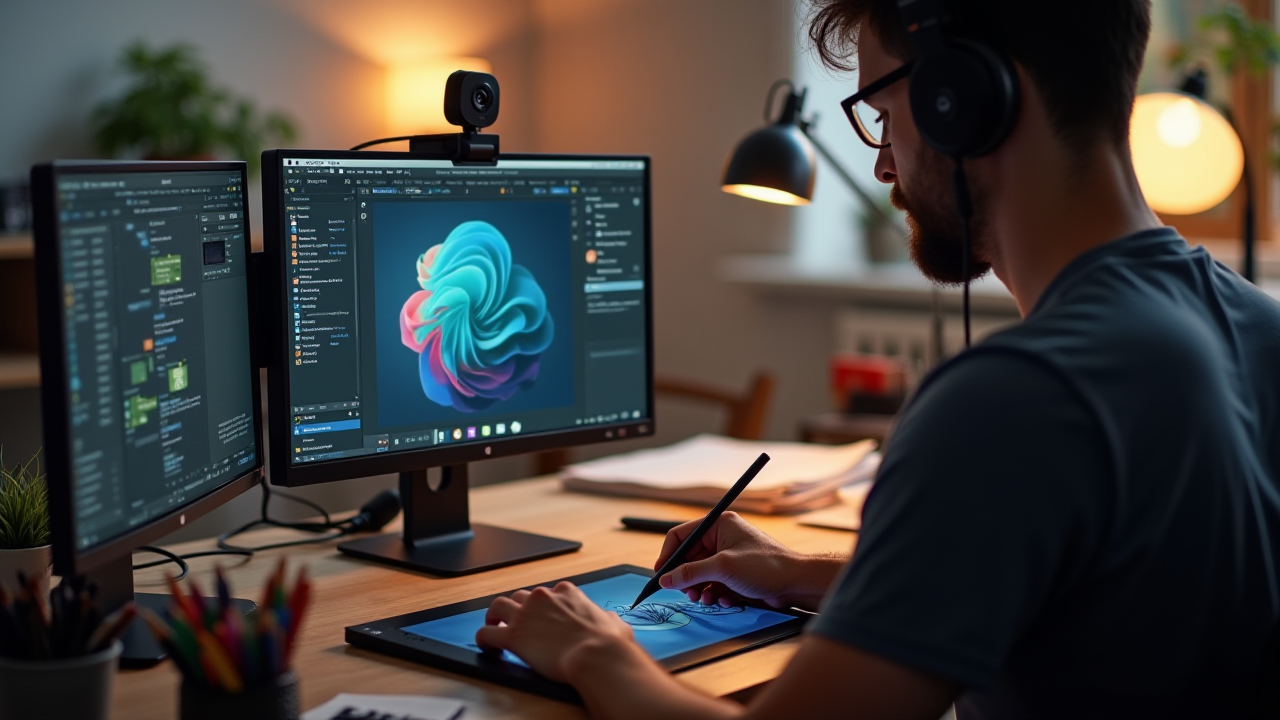
For digital artists, screen capture covers the work. OBS Studio is the standard free option. It handles screen capture, webcam, microphone, and overlay graphics in one application.
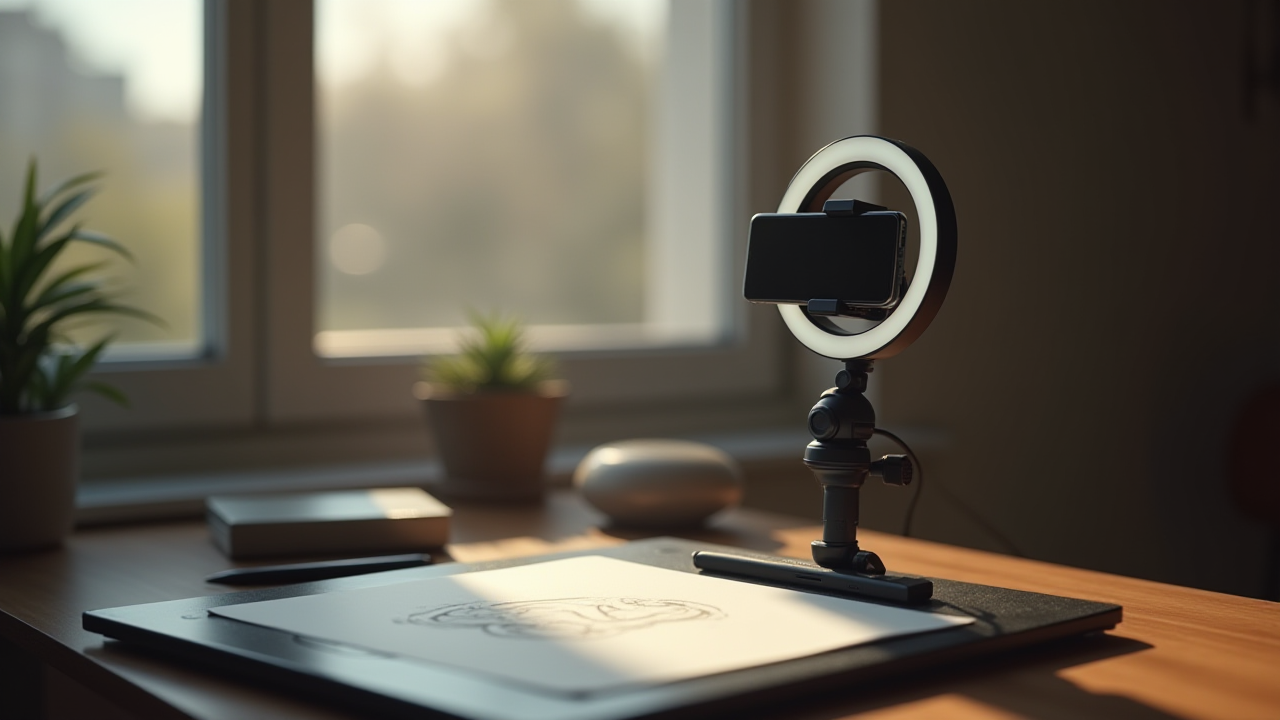
For traditional artists, a camera pointed at the workspace handles the work capture. A phone in a stand can work as a starter setup. A dedicated camera connected to the computer gives more flexibility.
Audio is the part most new streamers underinvest in. Even decent video with bad audio is hard to watch. A USB microphone in the budget range usually produces audio significantly better than a phone or laptop mic.
A second monitor is helpful for managing chat without disrupting the work area. Not essential at the start.
The setup can evolve over time. The artists who buy the most elaborate setups before they have an audience usually find the audience never comes. The artists who start with what they have and upgrade as the audience grows usually end up with the right setup for their actual needs.
The format is the structure of what happens during the stream. A clear format helps the audience know what to expect and gives the streamer a rhythm to follow.
Common formats for creative streams include working on commissions live (the most direct connection between streaming and commission work), working on personal projects with audience input, doing speed paints or process demonstrations, taking requests from viewers within defined parameters, and teaching specific techniques.
The format should fit both the work and the streamer's energy. A format that requires constant talking is exhausting for an introvert. A format that has long silent stretches loses viewers who came for interaction. The right format finds a balance between focused work and engagement.
For commission-based artists, streaming commission work brings a useful structure. The viewers see the actual work being done. The commission client gets the experience of watching their piece come together. The audience sees the value of commissioning work. Studio Queues commissions can be naturally featured in the stream rotation.
Live streaming rewards consistency more than perfection. A streamer who shows up at the same time every week builds an audience that knows when to find them. A streamer who streams sporadically struggles to build any audience at all.
The schedule does not need to be aggressive. Two to four streams a week of two to four hours each is enough to build an audience over time. The total hours matter less than the consistency of the schedule.
The schedule should fit the streamer's actual life. A schedule that requires twelve hours a day on stream is one that breaks within a month. A schedule built around realistic studio time is one that lasts.
Consistency works in both directions. The audience learns to show up. The streamer builds a rhythm. The cumulative effect over months and years is the difference between a stream that grows and one that does not.
The chat is where streaming differs from recorded content. Viewers expect interaction. They want to feel like they are part of the work, not just watching it.
Engagement does not mean responding to every message. It means acknowledging the room, answering questions about the work, and treating regular viewers like the community they are becoming.
A common practice is to greet new viewers, thank subscribers and supporters, and answer questions about technique or process. Beyond that, the streamer can return to focused work while the chat continues its own conversation.
The balance shifts depending on the stream. A tutorial or process stream is more chat-focused. A long commission session is more work-focused with periodic engagement.
The stream itself is one piece of a broader content rotation. The best streamers extend the value of each live session by repurposing the content.
Common practices include posting highlights and clips to short-form platforms (TikTok, Instagram Reels, YouTube Shorts), uploading edited recordings of streams to YouTube for the audience that prefers recorded content, posting work-in-progress images to social media from the streams, and writing about the process in a newsletter or blog.
The repurposing extends the audience beyond the live viewers. People who would never watch a four-hour stream might watch a one-minute clip, and some of them become regular viewers from there.
For commission-based artists, the repurposed content also functions as marketing for the commission practice. Viewers see the work being made, see the process, and develop the trust that converts to commissions when they have a project of their own.
Streaming revenue tends to come from several sources. Each one matters more or less depending on the streamer's setup and audience.
Subscriptions and platform monetization are the most direct. Viewers subscribe to the channel for a monthly fee, and the platform shares the revenue. This requires reaching certain thresholds on most platforms before it becomes meaningful.
Tips and donations through platform features or third-party tools (Streamlabs, Ko-fi, similar) let viewers support the streamer directly. Tip culture varies by platform and audience.
Sponsorships and partnerships emerge when the audience grows. Brands relevant to the artist's audience may pay for product placement, sponsored streams, or affiliate relationships.
Commissions are often the largest revenue source for artist streamers. The audience that watches the work becomes the audience that buys the work. Studio Queues handles the commission flow (intake, payment, delivery, licensing) so the streamer can focus on producing the work and the relationships rather than managing the operational side of each transaction. The fees are five percent on the free tier, one and a half percent on the premium tier, and zero percent for founding artists for as long as the premium subscription stays active, with only the first five hundred founding spots available.
Print sales, prepared products, and educational content (tutorials, brushes, presets) round out the revenue mix for many streamers.
Streaming creative work online blurs the line between work and life. The audience watches the work. The work happens at home. The home becomes part of the broadcast. The boundaries can disappear if they are not actively maintained.
Practical boundary practices include scheduling stream time the way you would schedule other work, not the way you would schedule recreation. Defining what topics are on and off limits in chat. Recognizing that the audience does not have unlimited claim on your time. Taking real breaks from streaming, including longer breaks for vacations or recovery.
The streamers who last over years are usually the ones who built sustainable boundaries early. The ones who burn out usually let the stream consume the rest of their life.
Streaming creative work is a long game. The audience grows slowly. The income builds over years. The community develops through hundreds of streams rather than a viral moment.
A working plan accounts for the patience required. The first six months might produce very little visible result. The eighteen-month mark is often when the work starts to compound. The audiences that build over years tend to be the most valuable, because the audience that found you slowly tends to stay.
For commission-based artists, the long game integrates with the broader practice. The stream builds the audience. Studio Queues converts the audience into commissions. The commissions support the studio time that produces the work the stream is built around. The cycle reinforces itself over time.
Most of what makes how to stream creative work online work over years is consistency rather than perfection. The freelancers who get this right are not the ones who found the perfect approach at the start. They are the ones who built habits around how to stream creative work online early, paid attention to what produced results, and kept refining the approach as the business grew.
Knowing how to stream creative work online comes down to a few habits. Decide why you are streaming. Pick the platform that fits the work. Set up the technical side without overinvesting. Build a stream format that fits your work and energy. Establish a consistent schedule. Engage with chat without losing focus. Build a content rotation around the stream. Develop the revenue side over time. Manage the boundaries. Plan for the longer game.
For commission-based artists, Studio Queues handles the commission side of the practice while the stream handles the audience and content side. The platform processes the brief, payment, delivery, and licensing for each commission while the streamer focuses on the work and the community.
The artists who build sustainable streaming practices are not the ones with the best setups or the loudest personalities. They are the ones who showed up consistently, produced work worth watching, and built the audience patiently over years.