Studio Queues Team · Last updated July 17, 2026
YCH commission prices explained: what Your Character Here commissions are, why they cost less than custom work, and typical price ranges by format.
YCH commission prices sit in a unique place on the commission market. They are usually cheaper than custom commissions of comparable size, they usually deliver faster, and they usually confuse first-time buyers who do not understand what they are actually buying. This guide walks through what a YCH commission is, how the pricing works, the different sale formats you will encounter, and what makes a YCH a good deal or a bad deal on either side of the transaction.
YCH stands for "Your Character Here." A YCH commission is a pre-designed base illustration (a pose, a scene, an outfit, a specific composition) that the artist has drawn without a specific character in mind, sold as a slot the buyer's character gets dropped into. The buyer does not get to pick the pose, the composition, the background, or the outfit. What they get is their character rendered in the artist's already-designed setup.
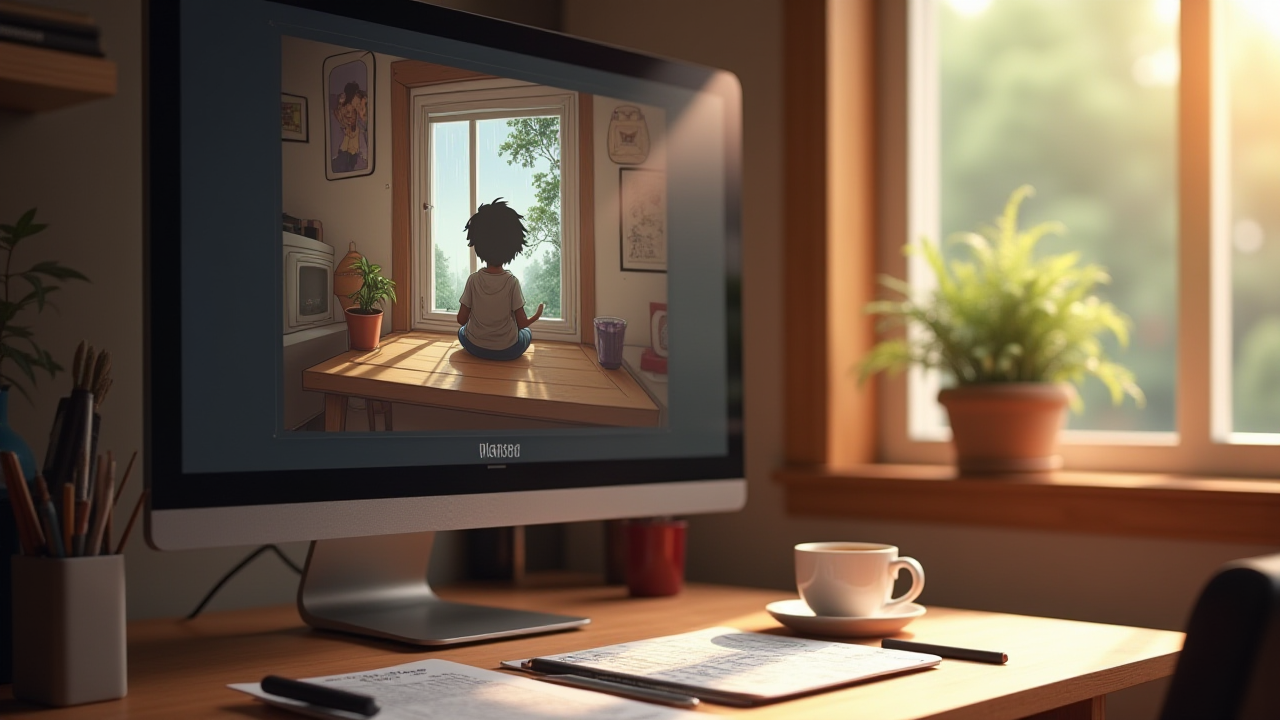
YCH bases can be anything: a character sitting on a windowsill in a coffee shop, two characters holding hands in a rainstorm, a chibi character wearing a specific holiday outfit, a full-body pose with dramatic lighting. Some YCHs are single-slot (one character fills one spot). Some are multi-slot (two, three, or four characters fill separate positions in the same scene). Some are sold once; others are sold multiple times with different characters filling the same base.
Structurally, a YCH is closer to a template with customization than to a fully custom illustration. That is the source of both its lower price point and its constraint set.
The YCH model exists because it solves a real problem for both sides of the market. From the artist's side, YCH work has predictable scope. The pose is decided. The background is decided. The rendering approach is decided. The only variable is which character gets filled in, which the artist quotes with less risk of scope creep or client indecision. That predictability means the artist can price lower per piece while still hitting a reasonable hourly rate, because the setup work amortizes across multiple sales or eliminates entirely for single-sale YCHs where the artist chose a pose they wanted to draw anyway.
From the buyer's side, YCH commissions are the fastest way to get their character rendered by a specific artist at a lower price point than the same artist's custom rates. A buyer who wants a piece from an artist charging $400+ for a custom commission might find a $80 YCH slot from the same artist that fits their character and their budget. The tradeoff is that the buyer does not control the pose, composition, or outfit; they get what the artist designed.
YCH commission prices vary substantially based on the base, the rendering level, and the sale format. Realistic ranges for independent artists in North America and Europe:
These prices assume personal-use licensing. YCH commissions rarely come with commercial-use rights included by default; if the buyer wants to use the finished piece for monetized content, streaming overlays, or merchandise, that is a separate license the buyer negotiates at intake. Where YCH pricing fits inside the broader labor-based pricing framework (base rate, complexity, usage tier, and reserve) is the same underlying model as custom work, just with a fixed complexity input; for the full framework, see how YCH pricing fits into the broader pricing framework.
The single biggest variable in YCH pricing is the base's complexity relative to the artist's normal work. A YCH base that took the artist eight hours to design once and gets sold twenty times has a very different economic profile from a YCH base that took two hours and only sells once. Artists selling large numbers of the same base price aggressively; artists selling one-off bases price closer to their custom rate.
Two dominant sale formats exist for YCH commissions. First-come-first-served (FCFS) works like a standard commission: the artist posts the YCH with a set price, buyers claim slots at that price, sales close when all slots are filled. This is the simpler model and dominates on Twitter, Instagram, and workflow-tool platforms.
Auction format works like a traditional auction: the artist posts the YCH with a starting bid, buyers bid competitively, and the highest bidder at close wins the slot. Auction YCHs from popular artists frequently sell for multiples of their starting bid. They also tend to attract more competitive buyers who are willing to pay a premium for slots from in-demand artists. Auction format is common in furry commission spaces, on FurAffinity, and among artists with large followings.
Neither format is universally better; they serve different market dynamics. FCFS produces predictable revenue and less operational overhead. Auctions produce higher per-slot revenue for popular bases at the cost of more coordination work.
Buyers should approach YCH commissions with clear expectations of what they are and are not:
Buyers coming to YCH from custom commissions sometimes chafe at the constraint set. That is a misunderstanding of what they bought. The lower price is the direct result of the constraint. If the buyer wants control over pose, composition, and outfit, they want a custom commission, and they should expect to pay custom-commission rates. For more resources on commission types and workflow across formats, browse more Studio Queues resources on commission types and workflow.
YCH commission prices work because the format eliminates the largest variable in a custom commission: the design work of the pose, composition, and background. Buyers get a lower price and faster turnaround; artists get predictable scope and (for popular bases sold multiple times) better hourly economics. Prices range roughly $30 for a simple chibi YCH to $500+ for a fully rendered full-body single-slot piece, with auction formats regularly clearing multiples of the starting bid for in-demand artists. The tradeoff is control: what buyers save in money, they trade in decisions.
If you want a workflow platform that supports YCH slot sales, milestone payments on higher-value slots, and structured intake for filling character details, you can lock in 0% platform fees while founding artist spots are still open. The founding artist program keeps 0% platform fees active for as long as your premium subscription stays active, and only the first 500 spots are available. Payment processing fees (Stripe) still apply the same way they would on any platform.