Studio Queues Team · Last updated July 17, 2026
VTuber model commission cost by format: PNGtuber $50-$600, Live2D $1,500-$7,000+, custom 3D $2,000-$10,000+. What each format includes.
The VTuber model commission cost you should expect depends almost entirely on which of three formats you are buying, and buyers who conflate them end up either dramatically overpaying for something simple or dramatically underpaying for something they never had a realistic chance of receiving. A PNGtuber, a Live2D model, and a 3D VRM model are not different tiers of the same product. They are three separate pipelines, built by different specialists, priced on different logic.
This guide walks through what each format actually is, what an artist does at each stage, how prices break down, and what makes them shift up or down. It is written for buyers commissioning their first (or first serious) VTuber model, and for artists sizing up which corner of the market they want to work in. Ranges given are for independent artist commissions in North America and Europe; markets in Japan, Korea, and elsewhere have different price structures shaped by local wages and platform norms.
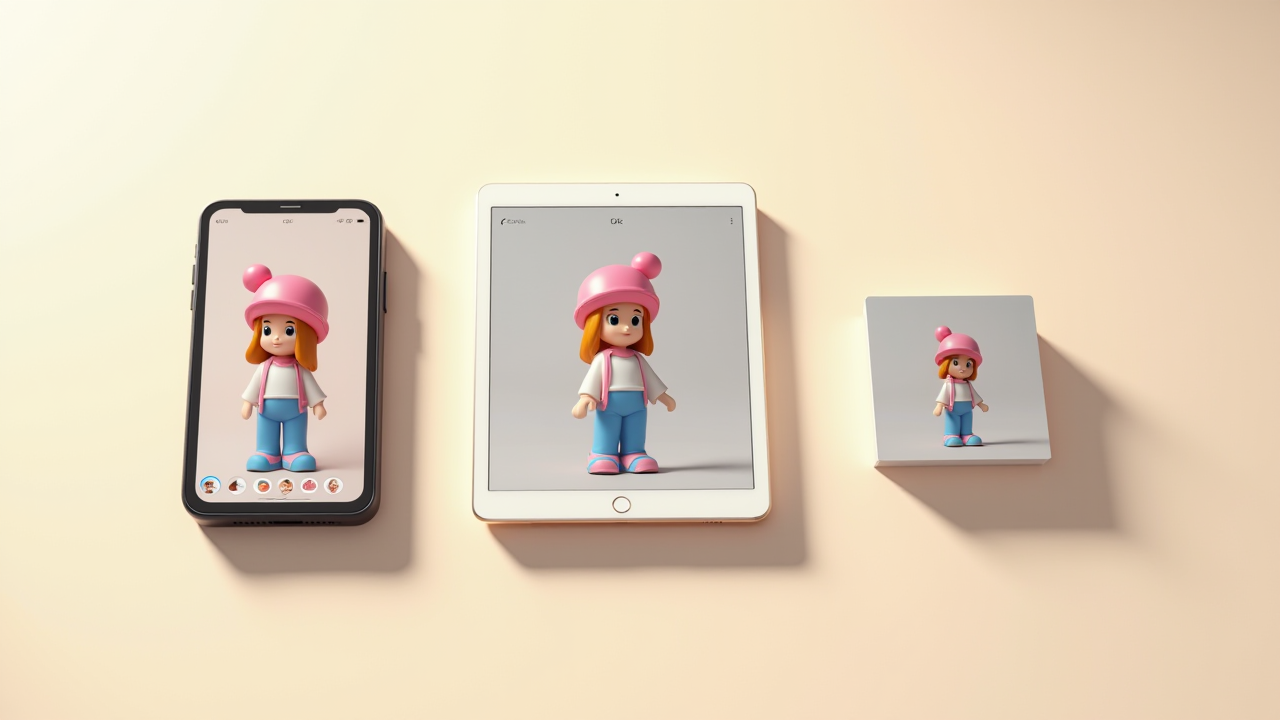
PNGtuber. The lightest format. A PNGtuber is a set of static PNG images (usually two to five: eyes-open mouth-closed, eyes-open mouth-open, blinking, and sometimes a few emotional states) that a tracking application swaps between based on the streamer's voice and blink detection. There is no rigging, no bones, no facial tracking beyond mouth-open and blink. Setup on the streamer side takes about ten minutes with a free tool. This is the format most streamers start with.
Live2D. The industry standard for expressive 2D VTuber models. According to Live2D's official product documentation, Cubism directly animates drawn illustrations to achieve dynamic expressions while preserving the charm of the original art, rather than reconstructing them as 3D. What that means practically: an artist draws the character in layered parts (face, mouth, eye components, hair strands, arms) and a rigger connects those layers to parameters that can be driven by face tracking software. The output is a model that moves with the streamer's face and voice while looking like a hand-drawn illustration.
3D VTuber model. A full 3D character, typically in the VRM format, that responds to full-body or upper-body tracking. Some are built from templates in VRoid Studio, which is Pixiv's free application for creating humanoid 3D avatars. Others are modeled from scratch in Blender, Maya, or ZBrush, then rigged and exported to VRM. 3D models handle broader movement and full-body streaming (dance streams, VR content) that 2D formats simply cannot support.
Which one you commission depends on what you plan to do with it, how much you plan to spend, and how long you want the model to serve you as your channel grows.
PNGtuber commissions run roughly $50 to $600 for a full set from an independent artist. What creates the spread inside that range:
PNGtubers make sense as a first VTuber model when a streamer is testing whether the format works for them, when the budget for a full Live2D is not yet there, or when the streamer's content does not need expressive facial tracking (talk shows, art streams, low-motion formats). Many streamers use a PNGtuber for a year, build their audience, then commission a Live2D once they know the character and format have earned the investment.
One thing to watch on the buyer side: because PNGtuber commissions look simple, first-time buyers sometimes push artists to include five or six expression states inside a low-tier quote. Every expression state is a fresh drawing pass. A five-expression PNGtuber is closer in effort to a small illustration series than to a single character piece, and pricing should reflect that. Artists who quote it flat because it "sounds easy" undercharge themselves. Buyers who resist paying per expression end up with three static states and no way to add more later without a re-commission.
Live2D is where the pricing conversation gets more complex, because the commission is almost always split between two specialists: the artist who draws the character (illustration) and the rigger who breaks the artwork into layers and connects it to parameters. Some commissioned artists do both. Many do not, and the split billing is normal.
Rough ranges for each half of a Live2D VTuber model commission cost from an independent creator:
What separates the low end from the high end at each stage:
On the illustration side: a lower-priced Live2D illustration typically has a single body pose, minimal outfit detail, and a few expression toggles baked in. A higher-priced illustration includes multiple outfit variants, complex accessories, physics-friendly hair and clothing (long hair, ribbons, capes, jewelry that swings), and layered detail work like blush, tears, and sweat drops as separate toggleable elements.
On the rigging side: the low end is basic face tracking (mouth-open, blink, minor head turn) with maybe one or two expression toggles. Mid-tier adds smooth XYZ head rotation, arm movement, breathing, and physics on hair and outfit. Top-tier rigging includes custom expressions, toggleable outfits, particle effects (sparkles, cry drops), animated mouth shapes matched to phonemes, and idle animations that make the model feel alive between active tracking movements. Complex physics work (long swishy hair, layered capes, jewelry) roughly doubles rigging time compared to simple designs.
Live2D VTuber model commission cost also scales with the tracking software the model needs to work in. Most Cubism-rigged models work in VTube Studio, VSeeFace, and similar apps out of the box. Models that need custom SDK integration for a game, VRChat use, or a company-branded product cost substantially more because they require additional export work and testing. If you are commissioning a model for standard streaming, this does not affect your price. If you are commissioning for anything commercial or software-integrated, it does.
3D models split into two very different market segments.
VRoid-based commissions start with a base model built or edited inside VRoid Studio (Pixiv's free 3D modeling tool), then customized with commissioned art on the textures, custom outfit modeling, or hair adjustments. Because the artist is building on a template rather than modeling from scratch, prices sit lower: roughly $200 to $1,500 for a solid custom VRoid with unique outfit and detail work. VRoid models export as VRM and work in VSeeFace, Warudo, and standard VTubing platforms.
Custom 3D from scratch is a different pipeline. The artist models the character in Blender, Maya, or ZBrush, sculpts the details, retopologizes to a stream-friendly polygon count, UV-unwraps, textures, rigs the skeleton, adds facial blend shapes, and exports to VRM. This is weeks of skilled work. Prices run $2,000 to $10,000+, and the top of that range is for models with high polygon counts, complex costume detail, custom animations, and full VRChat-ready optimization.
Which flavor of 3D you commission depends on what you want the model for. VRoid-based works well for solo streaming, casual VTubing, and streamers who want a distinct-looking 3D presence without a full custom-modeling budget. Full custom 3D is the correct choice for professional VTuber agencies, commercial branded characters, and streamers who plan to use the model heavily in VRChat, VR content, or dance streams where full-body detail matters. The VRoid project's official material notes that VRM models are portable across many VR/AR platforms, which is part of why 3D commissions carry stronger commercial-use implications than PNGtubers or standard-use Live2D models.
Beyond format, five inputs move the price on any VTuber commission:
The commercial-use dimension matters more than most first-time commissioners realize. The commissioned artist owns the copyright to the illustration unless it is explicitly transferred, and the rigger owns their work on the rigging. Buyers who commission a model at personal-use pricing and later use it for corporate branding are in the same position as any other commercial-use license violation: liable for the difference, at minimum, and at risk of losing the ability to use the model at all.
Because VTuber model commissions run into thousands of dollars for even mid-tier work, the risk-management side matters more than for smaller commissions. Practical rules:
Look for completed work, not just concept art. An artist with a portfolio of shipped rigged Live2D models on active VTuber channels is safer than an artist with beautiful sketches and no delivered models. Ask to see three shipped examples with the streamer's permission to reference.
Use milestone payments. A $4,000 Live2D commission paid 100 percent upfront is a bad deal for the buyer and often for the artist. Split the payment across concept approval, illustration approval, rigging draft, and final delivery. This protects both sides and gives you defined exit points if the project drifts.
Get the license in writing. Which streaming platforms you can use the model on, whether commercial use is included, whether merchandise is included, whether you can use it for corporate work. This all goes in the agreement before payment starts. Vague licensing on a $5,000 commission is where most disputes originate.
Understand the split-team dynamic on Live2D commissions. If your illustrator and rigger are two separate artists, they need to coordinate on file structure, layer naming, and physics-friendly design decisions before the illustration is finalized. An illustration that looks stunning as a static piece can be almost unriggable if the layers are merged wrong, the hair is a single flat shape instead of separated strands, or the outfit has details that clip through themselves during movement. Buyers commissioning a split team should confirm both artists have talked to each other and agreed on the technical spec before the illustration begins. If they have not, expect delays or a re-illustration bill later.
Budget for the tracking side. Software like VTube Studio, VSeeFace, and Warudo is largely free, but a good face-tracking webcam and a webcam with iPhone-quality face tracking (or an iPhone itself running the tracking app) matters more than most first-time VTubers realize. A $4,000 Live2D model tracked with a $10 webcam looks worse on stream than a $200 PNGtuber tracked properly. Factor that into the total spend before you commit to the highest model tier.
Where you take the commission also shapes how the payment structure, license documentation, and delivery are handled. For more on how platform choice affects the workflow around high-value commissions, see where VTuber artists take commissions and how that affects pricing. For additional resources on running or buying commissions, browse the more Studio Queues resources on commission pricing and workflow.
PNGtubers run $50 to $600 and make sense for early-career streamers testing the format. Live2D VTuber model commission cost sits between $1,500 and $7,000+ for a full package, split between illustration and rigging, and scales sharply with design complexity, rigging depth, and commercial-use rights. 3D models split into VRoid-based work ($200 to $1,500) and full custom 3D ($2,000 to $10,000+), with the format choice determined mostly by whether you need VRChat-ready modeling and full-body tracking versus talking-head-plus-arms streaming.
The right VTuber model is the one that fits your channel now and can grow with it for at least a year. Undercommissioning and needing to re-commission six months later costs more than the correct commission would have. Overcommissioning locks up money you could have used elsewhere. Pick the format that matches your content, budget for the license you actually need, and use milestone payments on anything over $1,000.
If you are running commissions on the artist side and want a queue-based workflow with milestone payments built in, you can lock in 0% platform fees while founding artist spots are still open. The founding artist program keeps 0% platform fees active for as long as your premium subscription stays active, and only the first 500 spots are available. Payment processing fees (Stripe) still apply the same way they would on any platform.