Studio Queues Team · Last updated July 17, 2026
Seven questions every commission intake form needs before you start a piece: scope, subject, style, usage, budget, deadline, and references.
Most commission disputes are not caused by scope creep, ghosting, or bad clients. They are caused by questions the artist never asked at intake. A piece gets started before its usage tier is settled, or its deadline was never on the record, or the artist assumed personal-use pricing and the client always intended to sell merch with it. By the time any of that surfaces, it is a renegotiation instead of a decision. A working commission intake form exists to move all of those decisions to the front, before the sketch, before the invoice, before either side is emotionally committed.
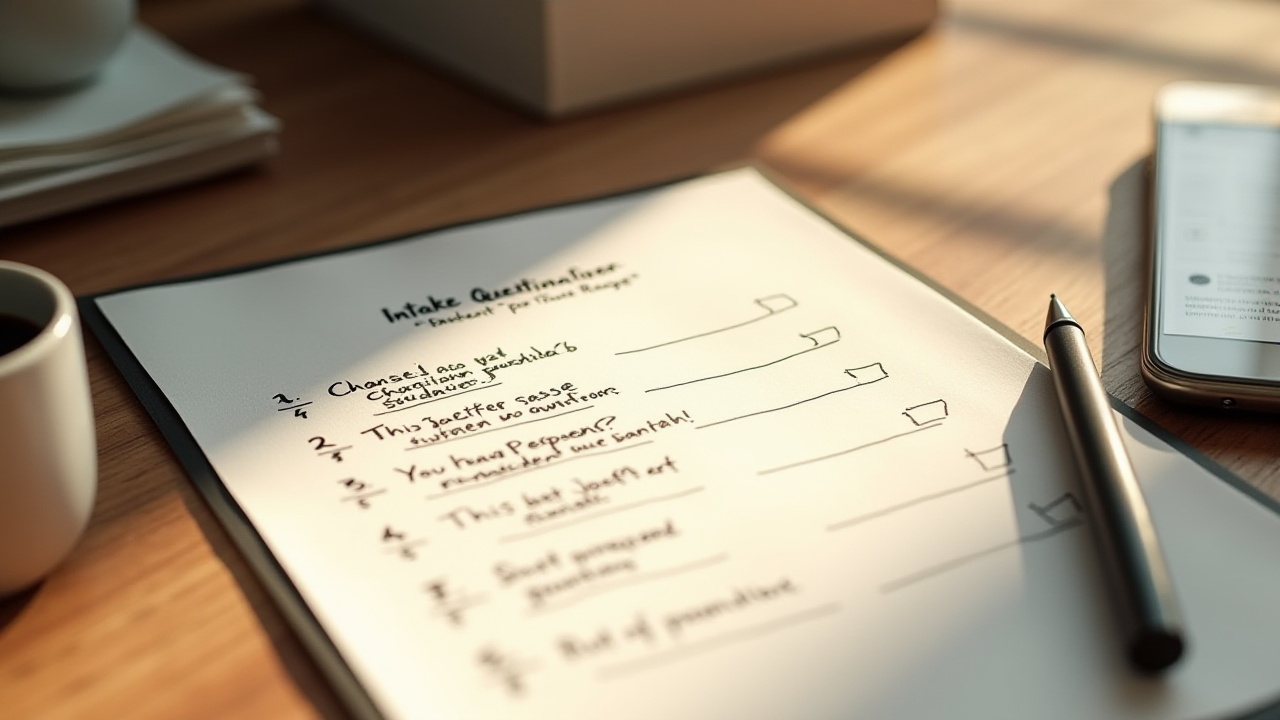
These are the seven questions to ask on any new commission, whether you ask them through a full commission intake form, a message reply template, or a scheduled intake call. Skip one and you will pay for it later.
The single-sentence description. "Half-body illustration of an original character." "Six-emote Twitch pack." "VTuber PNGtuber portrait." "Character reference sheet."
This sounds obvious, and clients still get it wrong. Someone asks for "a commission" and means a character sheet with three angles and expressions. Someone else asks for "a portrait" and means a full-body dynamic pose. The single-sentence description forces both sides to name the same thing. If the client can't tell you what the piece is in one sentence, the intake stops there until they can.
For character work, you need the character. Not "a girl with red hair." An existing character with references, a new character with a mood board, or an existing OC with a design sheet.
Ask specifically: is this character already designed? If yes, attach all existing references. If no, describe the character in writing (species, hair, eyes, height, build, personality) and provide inspiration images that lean in the direction the client wants. Original character designs cost more than illustrating an already-defined character, and you cannot quote either one without knowing which you are doing.
Clients rarely describe style well because they are not artists. They will say "your style" and mean a piece you drew two years ago, or they will send you a reference in a totally different style and expect that as the output. The intake question needs to be specific: which of my past pieces reads like the finish you want? Which two or three examples in your reference folder are closest to the style you have in mind?
Also nail rendering level: sketch, flat color, cel-shaded, fully rendered, painterly. These carry very different time costs. A sketch of a full-body character is not the same commission as a rendered piece with lighting studies, even if the composition is identical.
This is the question artists forget most often and the one that changes the price the most. What the client is going to do with the piece determines the license they need. Personal use, streaming and content use, commercial use, exclusive commercial license, and full copyright transfer all have different price bands, and all of them should be on the commission intake form as a specific selectable field, not left to a vague "usage" question.
Ask directly: where will this piece appear? Personal social media? A monetized Twitch channel? A merchandise line? A logo for a business? Get the specific answer. A client who says "just personal use" and then puts the piece on a t-shirt for sale has violated the license they paid for. The intake question puts you and them on the same page before that becomes an issue.
Ask for a real number. "What is your budget for this piece?" not "how much do you want to spend?" Some clients will refuse to name a number. Push back gently: your pricing depends on scope, and their budget shapes the scope. If the number is genuinely below what the piece costs, you both save time by finding that out immediately.
If the client is uncomfortable naming a number, offer a range of your own: "Pieces in this format typically fall between X and Y depending on complexity. Where are you looking to land?" This gives them a frame to respond to without you quoting blind.
"No rush" is not a deadline. It is a request for you to invent one. Ask: is there a date this piece needs to be delivered by? A birthday, a stream event, a launch, a merchandise deadline?
If there is no hard deadline, set a soft one based on your queue. "Standard turnaround for a piece like this is four to six weeks from paid deposit. Does that work for you?" This gives the client a concrete expectation, and it gives you cover if they message on week two asking for updates.
Rushed deadlines are their own line item. If a client wants a piece in a week when your normal queue would take four, that is a rush fee, quoted explicitly, or a refusal. Do not silently squeeze it in.
The last field on the intake, and the one that separates good briefs from expensive misunderstandings. Ask the client to attach every reference they have: character sheets, mood boards, existing art, screenshots, photos of the pose they want, examples of the lighting they like.
The correlation between "the client sent a lot of references" and "the finished piece landed close to what they wanted" is very high. Clients who send one blurry image and the phrase "you'll figure it out" are, without exception, the same clients who message you after final delivery to say the piece does not look how they imagined it. A commission intake form that requires a minimum reference attachment moves this problem from your inbox to their pre-submission checklist.
Once you have the seven questions, the mechanics of collecting them matter. Some artists use a Google Form and paste answers into a spreadsheet. Some use a Notion database. Some use a workflow-tool platform that generates the quote directly from intake responses. Which approach makes sense depends on volume and on how you handle the rest of your workflow. For context on how platform choice interacts with intake design, see where you take commissions shapes the intake.
Whatever tool you use, three practical rules apply. Make required fields actually required, so nobody gets past submission without answering the seven. Attach the answers to the eventual commission agreement, so what the client asked for at intake is what the license and delivery are built around. And review the seven questions every six months, because your pricing model, your usage tiers, and your queue capacity will shift, and the intake needs to shift with them. For more resources on running the operational side of commissions, browse the more Studio Queues resources for commission artists library.
Seven questions, asked properly at intake, prevent most of the problems that make commissions painful for artists. The piece is defined, the subject is specified, the style is nailed down, the usage is explicit, the budget is real, the deadline is on the record, and the references are attached before any drawing starts. Everything downstream (the quote, the sketch, the revisions, the delivery) is easier when these seven answers are in writing.
If you want a commission intake form that runs on a queue platform built for streamer artists, with the seven questions structured directly into the intake and the answers attached to every quote, you can lock in 0% platform fees while founding artist spots are still open. The founding artist program keeps 0% platform fees active for as long as your premium subscription stays active, and only the first 500 spots are available. Payment processing fees (Stripe) still apply the same way they would on any platform.