Studio Queues Team · Last updated July 17, 2026
Live2D vs PNGtuber cost comparison for VTubers: the 10x-15x price gap, what the premium buys, and how to decide which format fits your channel.
The Live2D vs PNGtuber cost question is where almost every new VTuber's commission budget planning starts and stalls. A PNGtuber can be commissioned for under $200. A Live2D model can run $1,500 to $7,000 or more. That is not a small delta, and the temptation is to either overpay for a Live2D you cannot yet fill the streaming hours of, or under-commission a PNGtuber and re-commission again eight months later when the channel outgrows it. This guide is the decision framework for choosing between the two 2D formats based on where your channel is now, not where you hope it will be. For the broader guide covering all three VTuber formats including 3D models, see the full VTuber model commission cost guide covering all three formats.
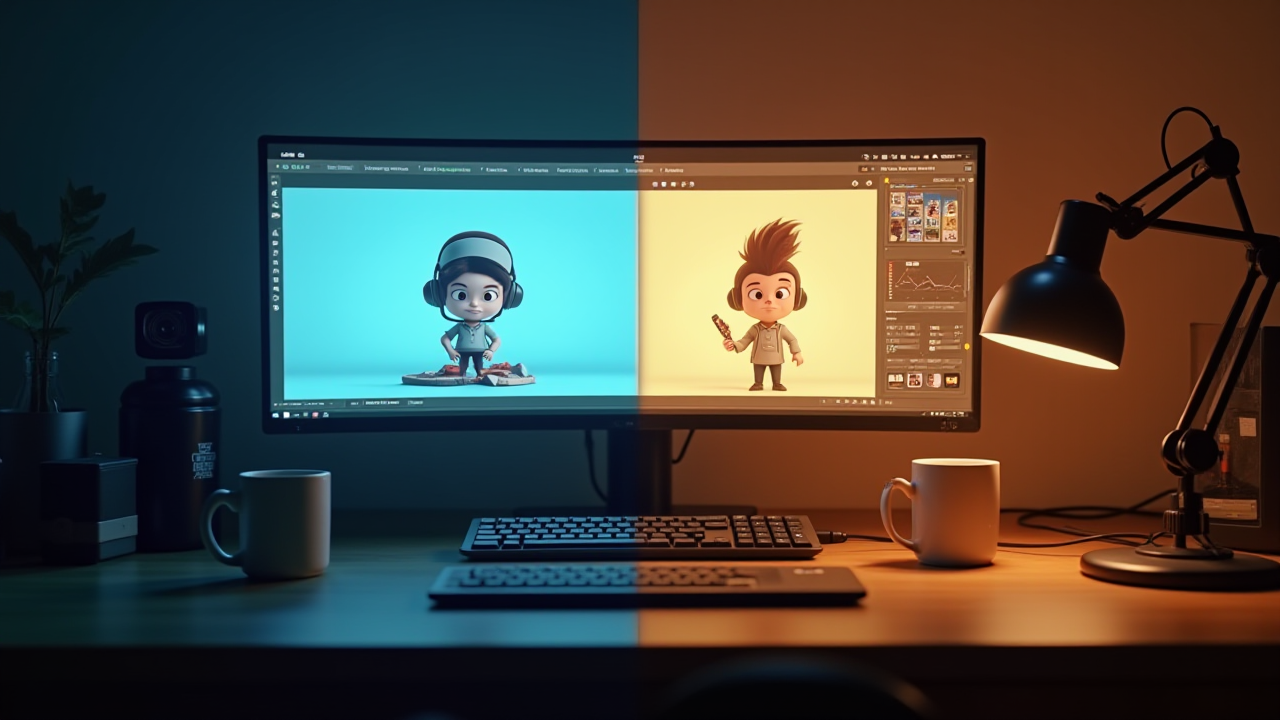
A PNGtuber is a set of static PNG images (typically two to five: mouth closed, mouth open, blink, and optional emotional states like happy, sad, angry) that a free tracking application swaps between based on the streamer's voice level and blink detection. Setup takes ten minutes with a free tool. There is no rigging, no bones, no facial parameter tracking beyond mouth-open and blink.
A Live2D model is a hand-drawn illustration that has been broken into layered parts (face, mouth, eye components, hair strands, arms, outfit elements) and rigged so those layers can be driven by face-tracking parameters. According to Live2D's official Cubism product page, the technology directly animates drawn illustrations to achieve dynamic expressions while preserving the charm of the original art. In practice, that means a Live2D character can turn its head, blink, open its mouth, smile, frown, and move responsively to the streamer's actual facial movements in real time.
Structurally, these are not different tiers of the same product. They are two different pipelines built by different specialists. A PNGtuber artist is drawing a small set of static images. A Live2D commission usually involves two specialists (an illustrator and a rigger) working sequentially on the same character.
The gap between the two formats is not about greed, and it is not because Live2D artists overcharge. It is about labor volume. Realistic price ranges for independent artist commissions in North America and Europe:
The price delta at typical mid-tier pricing is roughly 10x to 15x. A $250 PNGtuber and a $3,500 Live2D are not the same product with different price tags. They represent very different amounts of skilled work. The PNGtuber artist is delivering four to six flat character illustrations. The Live2D team is delivering a layered PSD with dozens of separated components, plus weeks of rigging work translating those components into working facial and body parameters.
Some of the price difference is timeline. PNGtuber turnaround is typically two to four weeks. Live2D turnaround is typically six to twelve weeks, longer for higher-tier work. If you need something on stream in three weeks, PNGtuber is the answer regardless of budget.
The premium for Live2D over PNGtuber buys real capabilities that materially change what streaming feels like on both sides of the camera. Specifically:
What Live2D does not buy: the underlying quality of your content, your streaming schedule discipline, your on-camera personality, or your community-building skills. A Live2D model on a low-effort channel produces low-effort content with a fancier avatar. Format follows content, not the reverse.
PNGtuber is the correct starting format if any of these apply:
The PNGtuber-first path also gives you real feedback on which expressions and states you actually use on stream. Streamers who commissioned Live2D first often discover that they use two out of the eight toggleable expressions they paid for. Streamers who lived through a PNGtuber phase first know exactly which expressions their content needs before they commit to Live2D.
The reverse case: sometimes commissioning Live2D first is the correct move. Skip PNGtuber if:
The Live2D vs PNGtuber cost decision reduces cleanly to: how confident are you in the character, and how much streaming volume can you commit to over the next 12 months? High confidence plus high volume justifies Live2D. Low confidence or low volume favors PNGtuber first. For more resources on commission types, workflow, and format choices, browse more Studio Queues resources on commission types and workflow.
The Live2D vs PNGtuber cost gap is real (10x to 15x at mid-tier pricing) and the premium buys real capabilities (facial expressiveness, body movement, physics, expression toggles). Whether the premium is worth it depends less on your budget than on your streaming volume, content type, character commitment, and audience stage. A PNGtuber is the correct first move for most VTubers building an audience from scratch; a Live2D is the correct first move for creators transitioning from an established platform or committing to a long-term character. There is no wrong answer, only misaligned answers.
Many streamers do both across time: PNGtuber for the first 6-12 months of a channel, Live2D once the channel has proven the character and format work. That is not indecision; it is smart sequencing.
If you want a workflow platform that supports commissions across both formats with structured intake, milestone payments, and clear licensing terms, you can lock in 0% platform fees while founding artist spots are still open. The founding artist program keeps 0% platform fees active for as long as your premium subscription stays active, and only the first 500 spots are available. Payment processing fees (Stripe) still apply the same way they would on any platform.